
By Alex Tee, Managing Director
4 min read
Executive Summary
- Progress often requires holding two seemingly conflicting truths at the same time
- Effective impact investing demands both compassion and rigor
- Strong lender relationships require being both firm and warm
- Social impact and environmental stewardship must reinforce one another
In his seminal book Good to Great, Jim Collins wrote about Admiral Jim Stockdale, who was captured after his A-4 Skyhawk was shot down over North Vietnam. He endured seven and a half years of torture in a prisoner of war camp before his release in February 1973. When asked who didn’t make it out, he answered simply: “The optimists.”
“The optimists who said, ‘We’re going to be out by Christmas.’ And Christmas would come, and Christmas would go…. They died of a broken heart.”
Instead, Stockdale offered a harder wisdom, one Collins distilled into: Retain faith that you will prevail in the end, regardless of the difficulties, AND confront the most brutal facts of your current reality.
On the surface, the two ideas appear conflicting. But in Stockdale’s experience — corroborated by the good-to-great companies Collins studied — those who prevailed were the ones who held both truths simultaneously: faithful about the destination, clear-eyed about the terrain. Companies that abandoned either side slid into blind optimism or bleak pessimism.
This is the genius of the “both/and” — taking two seemingly conflicting ideas and, instead of succumbing to the tyranny of the “either/or,” holding the tension between them productively. It has deep relevance for our work.
We approach our work with both compassion and rigor. Our investors invest out of compassion for the poor — out of a desire to identify with, to walk alongside them. Aptly, the word traces back to the Latin compassio: to suffer with. But good intentions alone are insufficient if not supported by competence and a business model that produces quality products profitably. That competence shows up externally in strong testimonials from customers and suppliers, and internally in disciplined operations and financial reporting, which we screen for.
When we engage with borrowers, we aim to be both firm and warm. We invest deeply in our relationships, as evidenced by our repeat loan rates: 42% of our main fund borrowers reborrowed. But we insist on appropriate collateral and guarantees, because skin in the game signals ownership. We expect adherence to loan amortization schedules, because a culture of discipline is critical — and we do our best to support borrowers financially and non-financially, out of a genuine understanding of their needs.
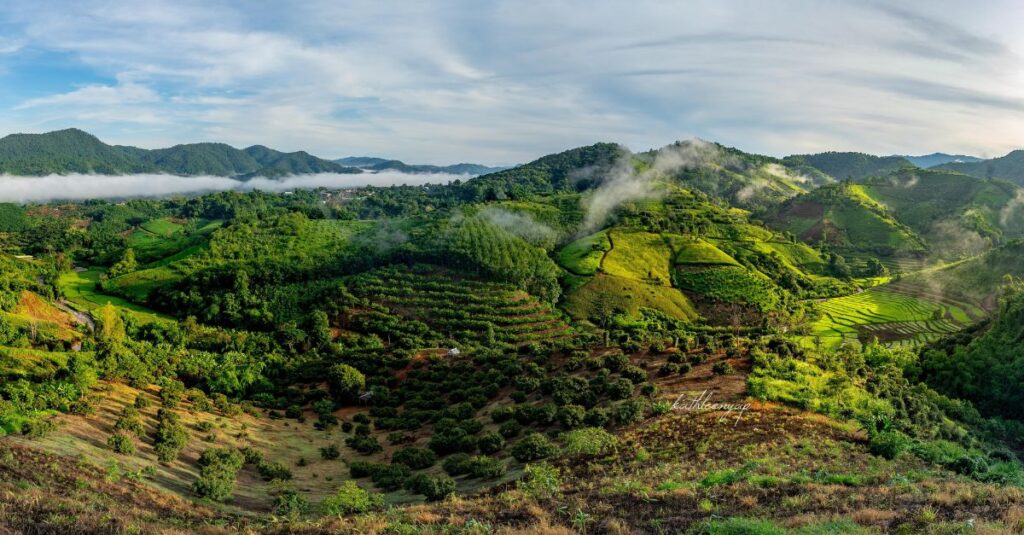
Our borrowers, especially agricultural producers, are businesses that create both social and environmental good — and we hold both to account. We reject the narrative that conventional chemical plantations, growing a single crop across hundreds of hectares, can meaningfully lift the poor out of poverty. These operations damage topsoil and destroy biodiversity. We believe instead that soil is the farmer’s greatest asset, and so we support businesses that raise farmer incomes through sustainable and regenerative agriculture.
We recently turned down a creditworthy company seeking funds to expand a corporate plantation. Their model involved renting land from smallholder farmers in five-year blocks, sweetened with a lump-sum upfront payment and a guaranteed farm job. The power imbalance between a large conglomerate and smallholder farmers is stark. The sweetener is just enough to tip farmers into the deal, but it forecloses their path to autonomy and independence.
This contrasts sharply with the model we love to support: a company that trains smallholder farmers working their own land, certifies them to organic standards, and purchases their harvest at a price premium. Farmers in this model gain knowledge that lasts a lifetime and produce that is competitive anywhere in the world. They move steadily toward autonomy and independence.
The corporate plantation would have met our credit standard, but it would not have met our impact standard. It might have generated some social benefit upfront, but without environmental integrity, that social gain would face a compounding headwind. It is not a borrower a “both/and” lender could approve.
The genius of the “both/and” is not that it makes decisions easier, but that it resists the tyranny of the “either/or”. It is the ethos we’re trying to work from, not always perfectly, but trying. Like the tension in a suspension bridge, which enables the transport of goods to remote villages, we value the tension between conflicting ideas and use it to sustain our work: the transport of much-needed capital to enterprises in rural and remote places that help communities become self-sufficient.