The Value of Coffee Grown Beneath the Forest Canopy

Baca dalam Bahasa Indonesia.

“The coffee price is good!”

That’s what Alex Tee, Managing Director of Beneficial Returns, heard repeatedly when he met coffee farmers in Bajawa, on Flores Island in eastern Indonesia.

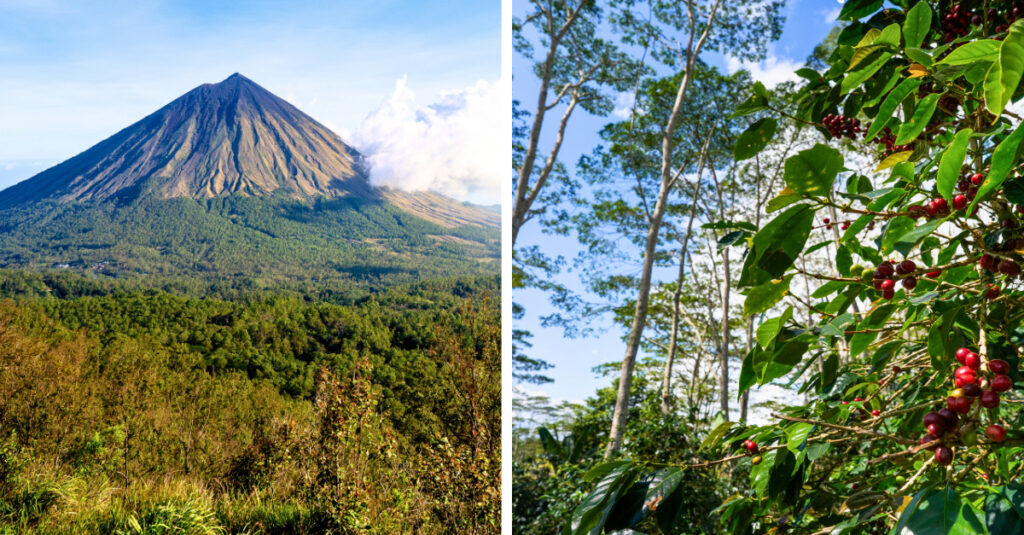
These farmers belong to Indigenous Ngada communities, who have cultivated coffee beneath the forest canopy for generations. Unlike conventional plantations, their Arabica coffee grows alongside native vegetation, without chemical fertilizers or pesticides, preserving biodiversity and protecting the surrounding forest.

Left: Mount Inerie, whose volcanic soil gives the region its fertility, is also believed by the Ngada people to be home to a protective deity. Right: Forest-grown coffee in Bajawa.

Yet, despite producing exceptional Arabica coffee, farmers have historically struggled to earn prices that reflect its quality. Limited local processing infrastructure and access to specialty markets have meant that much of the coffee’s potential value was captured elsewhere.

JYN Coffee is helping change that.

Founded in 2022 and based in Bajawa, the company purchases coffee cherries from approximately 75 Indigenous farmers, paying premium prices and processing them locally into specialty green coffee for international markets.

The average payout during the three-month 2026 harvest is expected to reach $2,200 per farmer.

But JYN’s relationship with the community began long before those purchases.

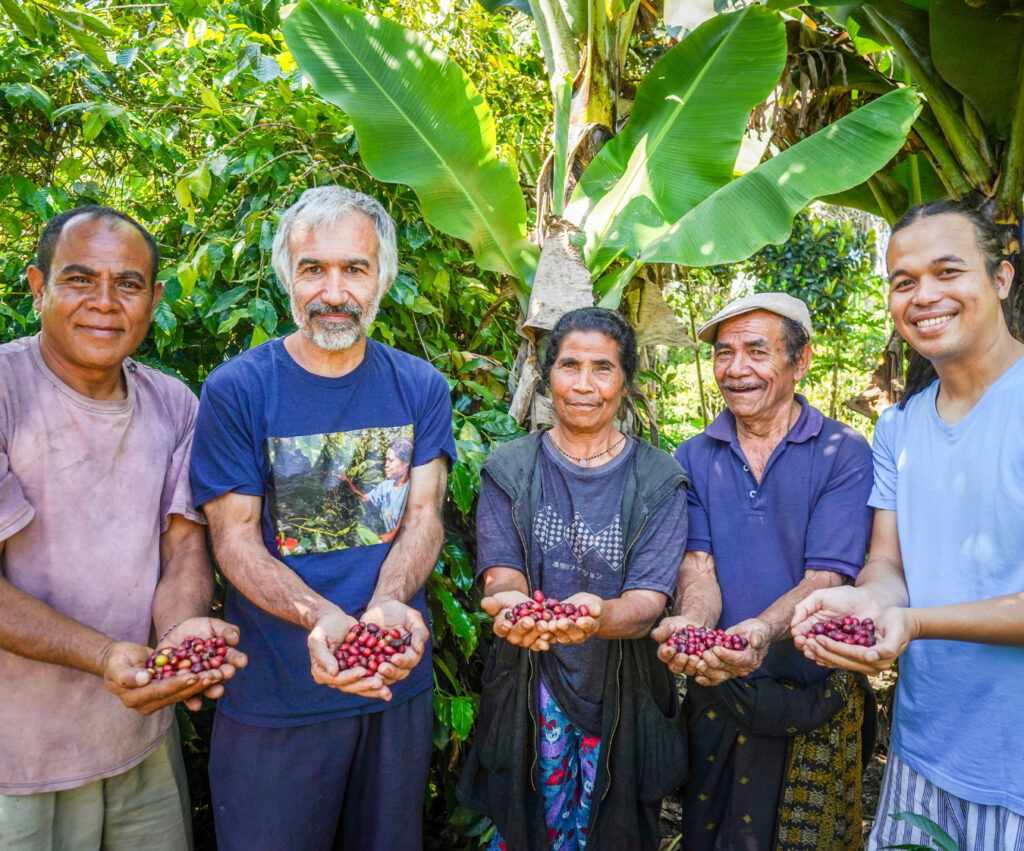
When co-founder Nicola Finardi sought land to build the company’s processing facility, he approached a local Ngada family: Opa Ignasius, Oma Paulina, and their son Thomas. Trust developed gradually, through a series of meetings that moved progressively closer to the family’s ancestral home.

When they finally agreed to rent the land, they told Nicola: “Now you’re family.”

Today, the factory stands beside their home, and Thomas works with JYN to manage relationships with local coffee farmers.

Left to right: Thomas, Nicola, Oma Paulina, Opa Ignasius, and Yalle.

Beyond better prices, the company is working to improve the long-term productivity of coffee farms through training in pruning and rejuvenating aging trees, alongside efforts to supply seedlings for replanting.

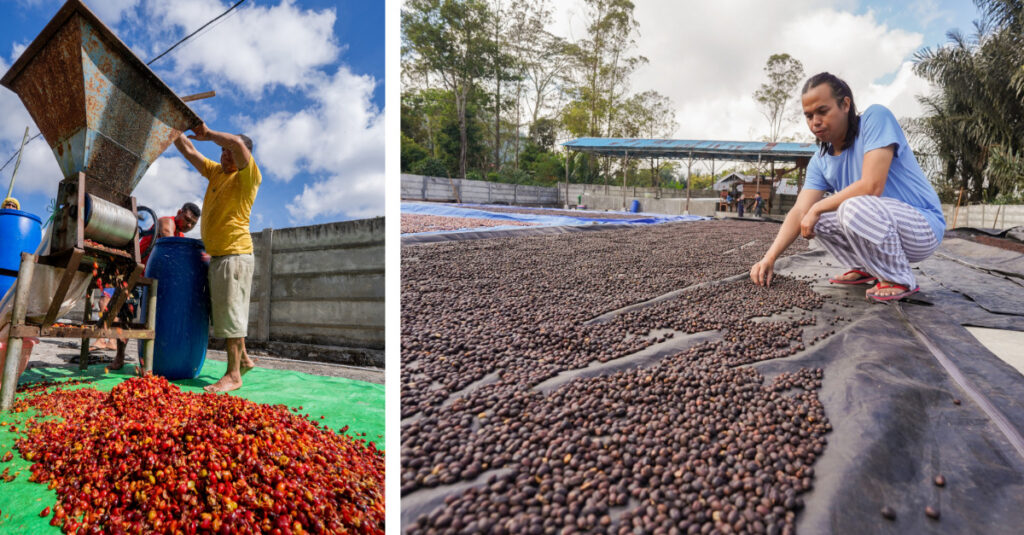
Left: Coffee beans being pulped at JYN's processing facility. Right: Yalle, JYN Coffee’s co-founder, inspecting beans as they dry.

Beneficial Returns approved a working capital loan to help JYN purchase more coffee from local farmers and fulfill growing export orders.

What makes this model particularly compelling is that farmers don’t have to choose between earning a better living and preserving their forests. By making traditional forest-grown coffee more valuable, JYN is strengthening livelihoods while creating an economic incentive to conserve the ecosystem that makes Bajawa coffee so distinctive.

The region was also shaken by a powerful earthquake in August. Although the rumbling woke farmers and their families in the early morning hours, the farms and factory remained intact.

For communities navigating both economic opportunities and natural hazards, stronger livelihoods can contribute to greater resilience. Supporting enterprises like JYN is one way Beneficial Returns seeks to help communities build that resilience while preserving the landscapes on which they depend.